For a lot of young adults, the word budget sounds restrictive.
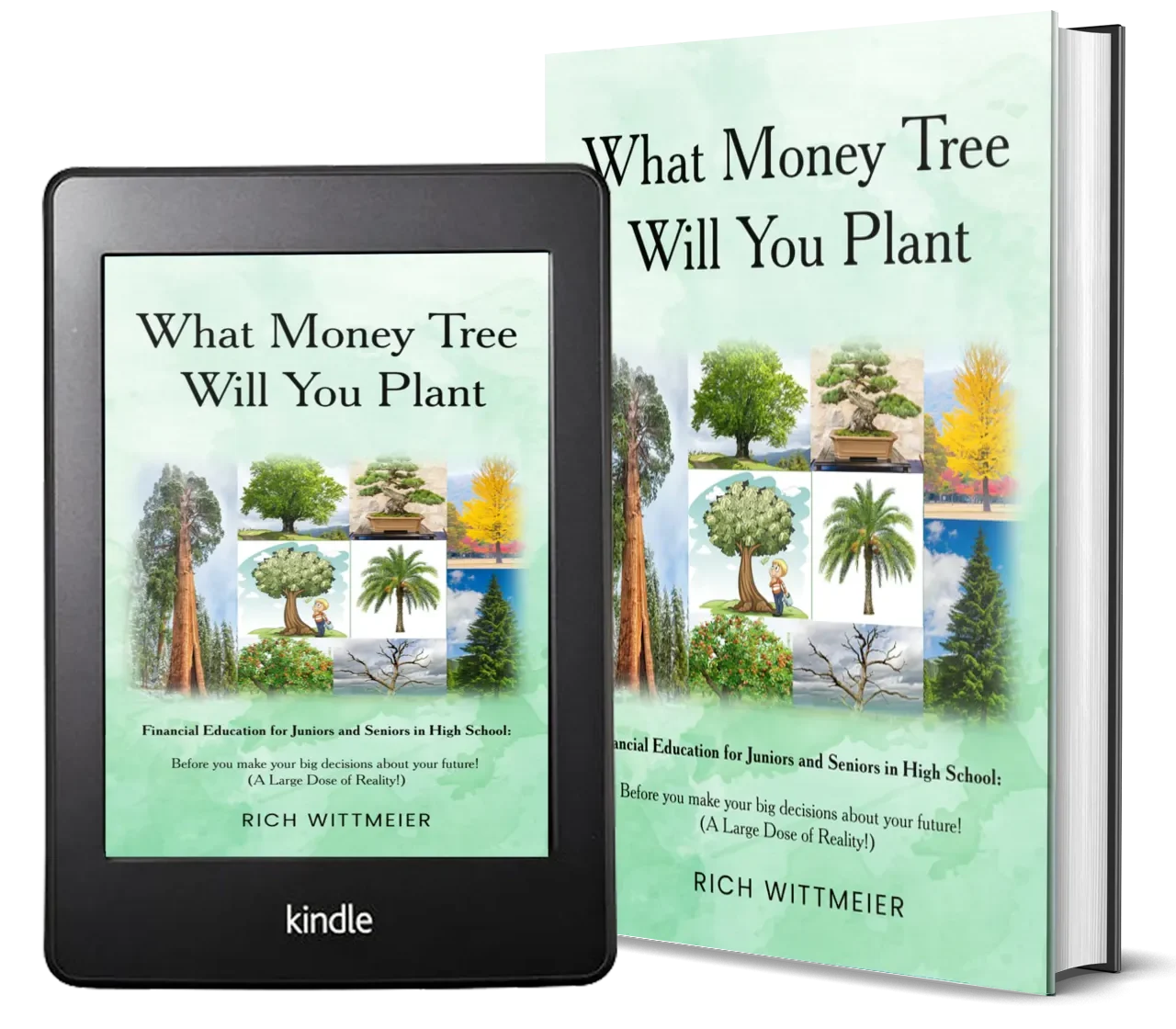
It can feel like a list of everything you are not allowed to buy, everywhere you are not allowed to go and every fun thing you are supposed to give up. But Rich Wittmeier’s What Money Tree Will You Plant presents budgeting in a very different way.
A budget is not a punishment. It is a plan.
In the book, Wittmeier explains budgeting as a way to understand how much money you have, how much you spend and how much you can save. He also introduces the idea of dividing income among needs, wants, savings and debt so students can begin seeing money as something they can manage intentionally rather than react to later.
That distinction matters, especially for high school juniors and seniors who may soon be dealing with their first steady paycheck, rent, transportation costs, insurance, food, taxes and other everyday expenses.
Without a budget, it is easy to assume there is “enough” money simply because there is still money in the account.
With a budget, the picture becomes much clearer.
Maybe part of that paycheck needs to cover housing. Another part goes toward transportation. Some of it should be saved. Utilities, insurance, food and other needs come next. Only then can someone see how much is realistically available for entertainment, vacations, upgrades and other wants.
Wittmeier’s approach is especially useful because he does not separate budgeting from the rest of life. Throughout What Money Tree Will You Plant, students are encouraged to think about the lifestyle they want and what it may cost at different stages of adulthood.
That turns a budget into more than a spreadsheet.
It becomes a bridge between income and goals.
Want to take a vacation? Budget for it. In the book, Wittmeier gives the example of estimating the total amount needed for a vacation and dividing that cost across the year so the money is gradually set aside.
Want a better car, your own apartment or eventually a home? The same idea applies. Know the full cost, understand what your income can support and plan before committing.
This is also why the book connects budgeting with career choices. If a future career is unlikely to produce enough income for the lifestyle a student hopes to build, that is useful information to know early. It creates an opportunity to rethink the career path, increase earning potential, adjust expenses or build a different plan.
None of that means young adults have to eliminate fun from their lives.
In fact, planning for wants is part of the budgeting discussion. The point is not to stop enjoying money. It is to make sure today’s spending does not quietly damage tomorrow’s goals.
That is one of the most practical lessons in What Money Tree Will You Plant.
A budget does not tell you that you cannot have the life you want.
It tells you what that life requires.
For young adults preparing to enter the real world, that is not something to fear. It is something that can provide clarity, confidence and more control over the future.
Learn more: https://moneytreeeducation.com/
Get What Money Tree Will You Plant on Amazon: https://www.amazon.com/dp/B0GQNYXF46/