Choosing a career in high school often starts with a simple question: What do I want to do?
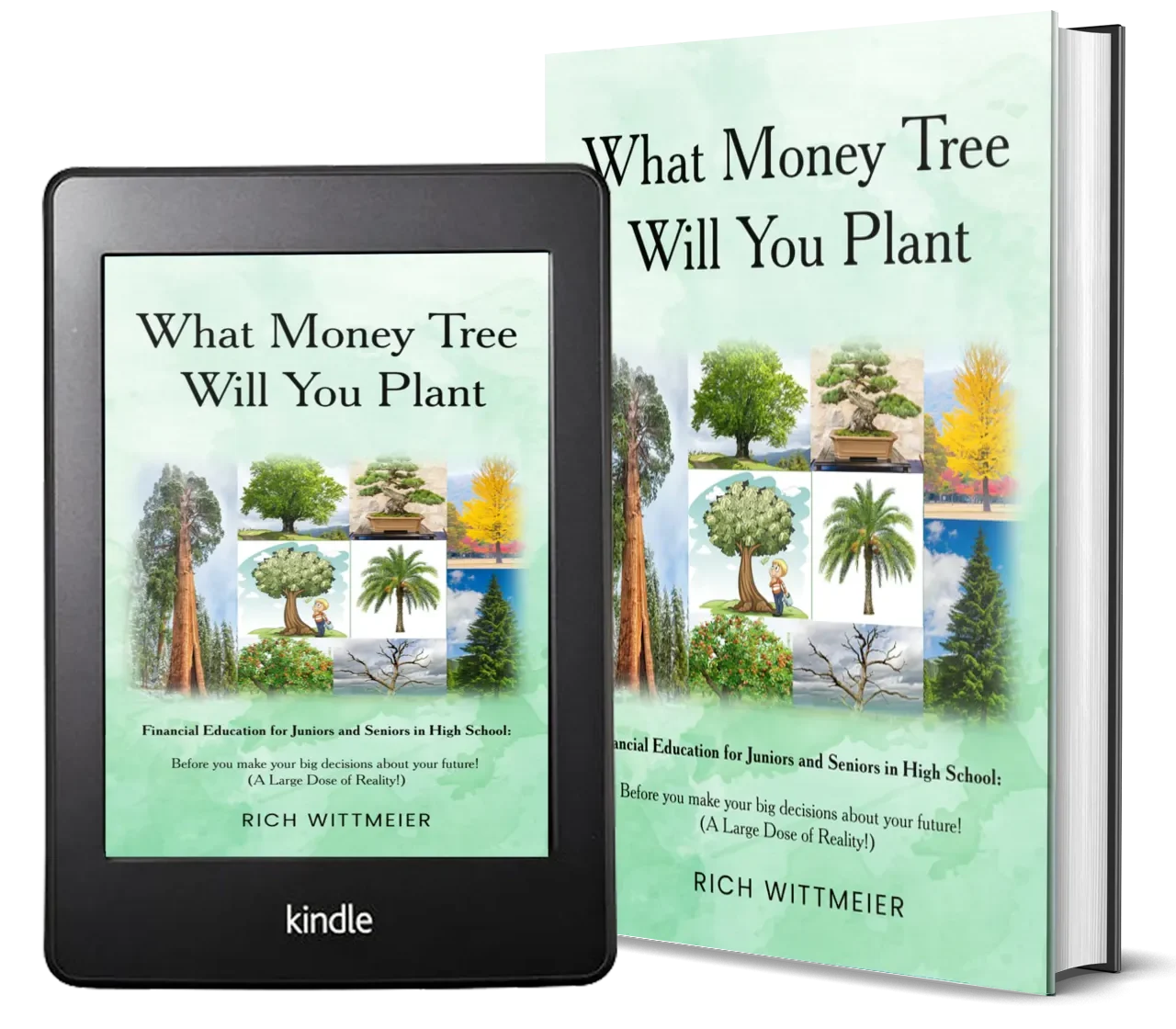
That question matters, but Rich Wittmeier’s What Money Tree Will You Plant adds another one that students may not hear often enough: Will that career support the life you want to live?
Written for high school juniors and seniors, the book is designed to help students understand that career planning and financial planning are closely connected. A job title may sound exciting, meaningful or impressive, but every career also comes with an earning range, benefits, growth potential and lifestyle implications.
Wittmeier encourages students to think beyond graduation and imagine the real costs that come with adult life. Housing, transportation, utilities, insurance, food, taxes, savings, entertainment and unexpected expenses all have to be paid from the income a career provides.
That is where the book becomes especially practical.
Rather than treating finances as a separate subject, What Money Tree Will You Plant connects financial education directly to life decisions. Students are asked to think about whether they want to attend college, go to trade school, enter the workforce, start a business or pursue another path. They are also encouraged to consider where they want to live, what kind of family life they imagine and what lifestyle they hope to build.
Then comes the reality check: what will all of that cost?
A student who dreams of becoming a teacher, engineer, mechanic, entrepreneur, nurse or lawyer may have very different income possibilities. The book encourages readers to research those earning paths and compare them with the financial demands of the future they envision.
That does not mean choosing a career based only on money.
Wittmeier repeatedly emphasizes that students should aim for work they enjoy and a path that allows them to pursue their goals. The point is to make informed decisions instead of discovering years later that an income level and a desired lifestyle do not fit together.
Budgeting is a major part of that process. The book walks students through essential spending categories and introduces budgeting as a way to see how income, needs, wants, savings and debt interact.
For a high school student, that can make career planning feel far more real.
A $60,000 salary may sound huge until taxes, rent or a mortgage, transportation, food, insurance, utilities and savings are taken into account. Likewise, a lower-paying career may still support the lifestyle someone wants depending on where they live, how they manage expenses and how their income grows over time.
That is one of the strongest lessons in What Money Tree Will You Plant: financial knowledge gives students a clearer picture of their choices.
The book does not tell readers exactly what to do. Instead, it gives them questions, exercises, examples and financial topics to consider before making major decisions.
For students approaching graduation, that kind of preparation can be valuable. Dreams are important. Career ambition is important. But knowing what life costs can help turn those dreams into plans that have a stronger chance of working.
Learn more: https://moneytreeeducation.com/
Get What Money Tree Will You Plant on Amazon: https://www.amazon.com/dp/B0GQNYXF46/