Most teenagers spend a lot of time thinking about their future.
They dream about careers, college, cars, homes, travel, financial success and the kind of life they hope to build. Parents encourage them to think big. Teachers encourage them to pursue their goals. Society tells them they can achieve anything they set their minds to.
And all of that is true.
But there is one important piece of the conversation that is often missing:
What will those dreams actually cost?
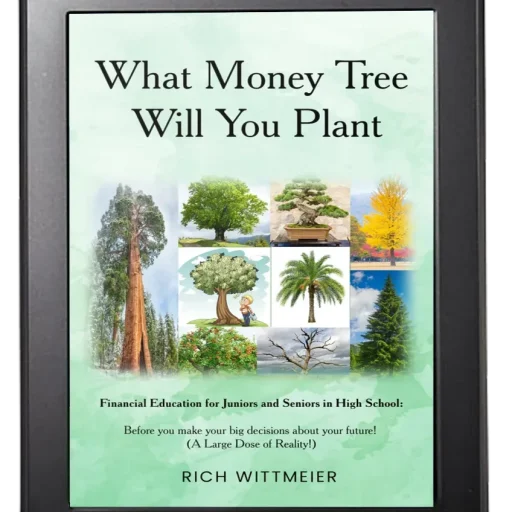
That question is at the center of What Money Tree Will You Plant: Financial Education for High School Juniors and Seniors—Before You Make the Biggest Decisions of Your Future by Rich Wittmeier.
The book’s subtitle includes a phrase that perfectly describes its mission: “A Large Dose of Reality!” And in today’s world, that reality may be exactly what many students need.
The transition from high school to adulthood comes faster than most teenagers realize. One day they are focused on classes, sports, friends and graduation. The next, they are being asked to make decisions involving college tuition, student loans, career paths, housing, transportation, taxes, insurance and long-term financial responsibilities.
Unfortunately, many young adults enter this stage of life without the financial knowledge needed to make informed decisions.
Rich Wittmeier wrote this book to help change that.
Written specifically for high school juniors and seniors, the book serves as a practical guide to understanding the financial realities that accompany adult life. It introduces students to concepts that will affect them almost immediately after graduation, including budgeting, borrowing, credit cards, inflation, taxes, savings, retirement planning, housing, transportation and career earnings.
What makes the book different from many traditional personal finance resources is its focus on real-world application.
Rather than simply teaching financial terminology, Wittmeier encourages students to think critically about their future. He asks questions many teenagers have never seriously considered:
- What kind of life do you want?
- What will that lifestyle cost?
- How much money will you need to earn?
- Will your chosen career support your goals?
- How will inflation affect your future expenses?
- What happens if your financial plan doesn’t match your dreams?
These questions transform financial education from an abstract subject into a personal and meaningful exercise.
The book also reflects Wittmeier’s own life experiences. A South Dakota farm boy who went on to earn advanced engineering degrees and spend decades in leadership roles with GE, he understands the value of hard work, planning and long-term thinking. His writing style is straightforward, practical and easy to understand, qualities that make the material especially accessible to students.
For parents and educators, the book offers another benefit: it helps start conversations that often do not happen soon enough. Topics such as debt, budgeting, salary expectations, saving and financial responsibility are critical life skills, yet many families and schools struggle to address them in a structured way.
What Money Tree Will You Plant provides a framework for those discussions.
At its core, the book delivers a simple but powerful message: dreams are important, but dreams require planning. Success is not just about choosing a career or earning a degree. It is about understanding the financial realities that support the life you want to build.
In a world where financial decisions arrive earlier and carry greater consequences than ever before, Rich Wittmeier offers students something invaluable: a large dose of reality before reality arrives.
And that may be one of the greatest gifts a young adult can receive.