It is easy to dream about the future.
A comfortable house. A reliable car. Vacations with family. A rewarding career. Maybe children, pets, a boat or enough financial freedom to enjoy life without constantly worrying about bills.
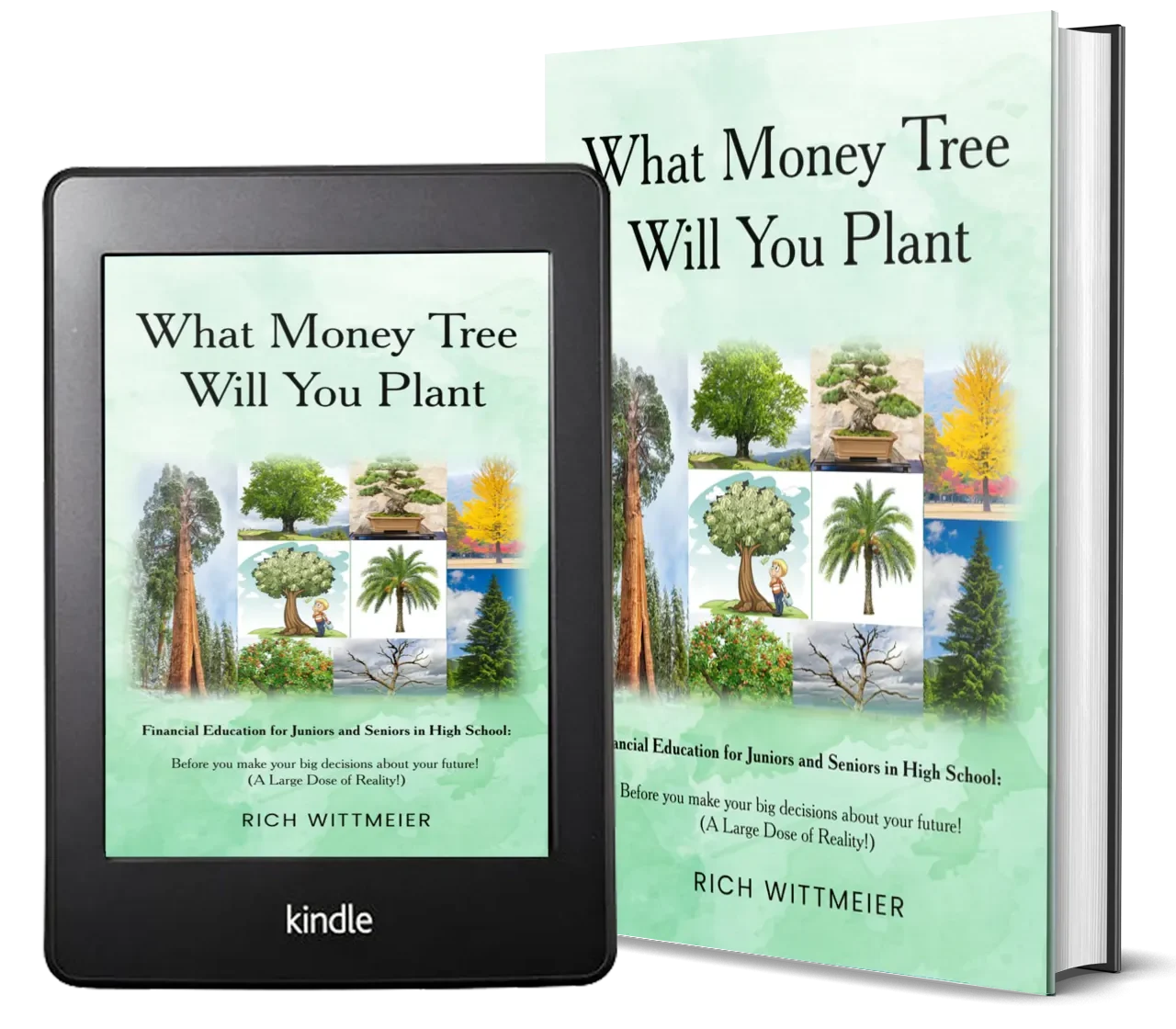
But Rich Wittmeier’s What Money Tree Will You Plant asks high school students to consider something that often gets left out of those dreams:
What will all of that actually cost?
Written for high school juniors and seniors, the book encourages students to think about their future in practical financial terms before major decisions about careers, education and lifestyle begin to lock into place. Rather than telling readers to dream smaller, Wittmeier challenges them to understand the numbers behind those dreams.
That means starting with the math.
A house is more than a purchase price. It may include a mortgage, property taxes, insurance, utilities, maintenance and repairs. A car is more than a monthly payment. There may be fuel, insurance, registration, tires, routine maintenance and unexpected repairs.
Vacations require planning too. In the book, Wittmeier encourages readers to estimate what they want to spend and build that amount into a monthly budget instead of treating travel as an expense that somehow takes care of itself.
Then there is family life.
Food, clothing, housing, transportation, healthcare, insurance, entertainment, savings and countless everyday expenses all become part of the financial picture. Suddenly, the salary that sounded impressive in high school may look very different once real-life expenses are deducted.
This is why What Money Tree Will You Plant places so much emphasis on budgeting.
The book presents a budget as a way to understand how much money is coming in, where it needs to go, what can be saved and how much remains for wants. It is not about removing every enjoyable purchase from life. It is about knowing whether the lifestyle you want is financially sustainable.
Wittmeier also connects these calculations directly to career choices. Students are encouraged to ask what their chosen career may pay and whether that income can realistically support the future they imagine.
That can be an uncomfortable question, but it is also a useful one.
If the numbers do not work, the answer does not necessarily have to be “give up the dream.” The book encourages readers to consider other possibilities. They may improve their earning potential, pursue additional education or training, change career direction, reduce unnecessary expenses or reshape their budget while keeping their larger goals in sight.
That is one of Wittmeier’s recurring lessons: adjust the plan when necessary, not automatically the dream.
For teenagers preparing to enter adulthood, learning this early can be powerful.
Dreaming about the house, car, family and vacations is the fun part. Understanding what those things require financially is what turns imagination into a plan.
What Money Tree Will You Plant encourages students to start doing that math before life sends the bills.
Because building the future you want begins with knowing what it will take to pay for it.
Learn more: https://moneytreeeducation.com/
Get What Money Tree Will You Plant on Amazon: https://www.amazon.com/dp/B0GQNYXF46/